

All of the essential information you need to know when applying for elk and antelope in Arizona this application season

Item | Hunting license |
|---|---|
Nonresident | $160 |
Nonresident Youth | $5 |
Resident | $37 |
Resident Youth | $5 |
Item | Application fee |
Nonresident | $15 |
Nonresident Youth | $15 |
Resident | $13 |
Resident Youth | $13 |
Item | Elk permit |
Nonresident | $650 |
Nonresident Youth | $650 |
Resident | $135 |
Resident Youth | $135 |
Item | Elk (youth-only permit) |
Nonresident | N/A |
Nonresident Youth | $50 |
Resident | N/A |
Resident Youth | $50 |
Item | Antelope permit |
Nonresident | $550 |
Nonresident Youth | $550 |
Resident | $90 |
Resident Youth | $90 |
Item | PointGuard fee |
Nonresident | $10 |
Nonresident Youth | $10 |
Resident | $10 |
Resident Youth | $10 |
Item | PointGuard Plus (all species) |
Nonresident | $25 |
Nonresident Youth | $25 |
Resident | $25 |
Resident Youth | $25 |
Item | Nonresident | Nonresident Youth | Resident | Resident Youth |
|---|---|---|---|---|
Hunting license | $160 | $5 | $37 | $5 |
Application fee | $15 | $15 | $13 | $13 |
Elk permit | $650 | $650 | $135 | $135 |
Elk (youth-only permit) | N/A | $50 | N/A | $50 |
Antelope permit | $550 | $550 | $90 | $90 |
PointGuard fee | $10 | $10 | $10 | $10 |
PointGuard Plus (all species) | $25 | $25 | $25 | $25 |
Unit |
Dates |
Trophy potential |
Harvest success |
Nonresident points to draw 2025 |
Resident points to draw 2025 |
10 early rifle |
Sept. 25 to Oct. 1 |
360”+ |
88% |
17% with 30 |
22% with 24 |
23 South early rifle |
Sept. 25 to Oct. 1 |
380”+ |
60% |
Random only |
100% with 26 |
23 North early rifle |
Sept. 25 to Oct. 1 |
380”+ |
87% |
17% with 29 |
100% with 26 |
9 early rifle |
Sept. 25 to Oct. 1 |
370”+ |
100% |
14% with 29 |
33% with 26 |
3A/3C early rifle |
Sept. 25 to Oct. 1 |
360”+ |
95% |
50% with 29 |
100% with 25 |
23 North early archery |
Sept. 11 to 24 |
380”+ |
50% |
100% with 27 |
34% with 18 |
23 South early archery |
Sept. 11 to 24 |
380”+ |
70% |
Random only |
52% with 18 |
1/2B/2C muzzleloader |
Sept. 25 to Oct. 1 |
360”+ |
100% |
25% with 27 |
56% with 23 |
27 early rifle |
Sept. 25 to Oct. 1 |
370”+ |
74% |
50% with 26 |
86% with 24 |
9 early archery |
Sept. 11 to 24 |
370”+ |
69% |
61% with 26 |
44% with 17 |
10 early archery |
Sept. 11 to 24 |
360”+ |
53% |
75% with 25 |
100% with 15 |
3A/3C early archery |
Sept. 11 to 24 |
360”+ |
82% |
67% with 23 |
35% with 14 |
1/2B/2C early archery |
Sept. 11 to 24 |
360”+ |
61% |
67% with 22 |
30% with 14 |
23 late rifle |
Nov. 27 to Dec. 3 |
380”+ |
69% |
29% with 21 |
83% with 12 |
1/2B/2C late rifle |
Nov. 27 to Dec. 3 |
360”+ |
100% |
100% with 19 |
49% with 12 |
10 muzzleloader |
Nov. 6 to 12 |
360”+ |
46% |
100% with 19 |
100% with 11 |
27 early archery |
Sept. 11 to 24 |
370”+ |
32% |
42% with 18 |
100% with 12 |
27 late rifle |
Nov. 27 to Dec. 3 |
370”+ |
88% |
33% with 16 |
100% with 11 |
27 late rifle |
Dec. 4 to 10 |
370”+ |
82% |
46% with 14 |
42% with 9 |
Unit | Dates | Trophy potential | Harvest success | Nonresident points to draw 2025 | Resident points to draw 2025 |
10 early rifle | Sept. 25 to Oct. 1 | 360”+ | 88% | 17% with 30 | 22% with 24 |
23 South early rifle | Sept. 25 to Oct. 1 | 380”+ | 60% | Random only | 100% with 26 |
23 North early rifle | Sept. 25 to Oct. 1 | 380”+ | 87% | 17% with 29 | 100% with 26 |
9 early rifle | Sept. 25 to Oct. 1 | 370”+ | 100% | 14% with 29 | 33% with 26 |
3A/3C early rifle | Sept. 25 to Oct. 1 | 360”+ | 95% | 50% with 29 | 100% with 25 |
23 North early archery | Sept. 11 to 24 | 380”+ | 50% | 100% with 27 | 34% with 18 |
23 South early archery | Sept. 11 to 24 | 380”+ | 70% | Random only | 52% with 18 |
1/2B/2C muzzleloader | Sept. 25 to Oct. 1 | 360”+ | 100% | 25% with 27 | 56% with 23 |
27 early rifle | Sept. 25 to Oct. 1 | 370”+ | 74% | 50% with 26 | 86% with 24 |
9 early archery | Sept. 11 to 24 | 370”+ | 69% | 61% with 26 | 44% with 17 |
10 early archery | Sept. 11 to 24 | 360”+ | 53% | 75% with 25 | 100% with 15 |
3A/3C early archery | Sept. 11 to 24 | 360”+ | 82% | 67% with 23 | 35% with 14 |
1/2B/2C early archery | Sept. 11 to 24 | 360”+ | 61% | 67% with 22 | 30% with 14 |
23 late rifle | Nov. 27 to Dec. 3 | 380”+ | 69% | 29% with 21 | 83% with 12 |
1/2B/2C late rifle | Nov. 27 to Dec. 3 | 360”+ | 100% | 100% with 19 | 49% with 12 |
10 muzzleloader | Nov. 6 to 12 | 360”+ | 46% | 100% with 19 | 100% with 11 |
27 early archery | Sept. 11 to 24 | 370”+ | 32% | 42% with 18 | 100% with 12 |
27 late rifle | Nov. 27 to Dec. 3 | 370”+ | 88% | 33% with 16 | 100% with 11 |
27 late rifle | Dec. 4 to 10 | 370”+ | 82% | 46% with 14 | 42% with 9 |
Area |
Trophy potential |
Bull:cow ratio |
Harvest success 2024 |
Nonresident points to draw 2025 |
6A early archery |
330”+ |
21:100 |
51% |
63% with 12 |
5BS late archery |
340”+ |
27:100 |
26% |
100% with 12 |
27 late archery |
370”+ |
26:100 |
29% |
34% with 12 |
10 late archery |
360”+ |
14:100 |
0% |
100% with 12 |
7E early archery (wilderness) |
330”+ |
42:100 |
47% |
100% with 10 |
6B early archery |
320”+ |
30:100 |
38% |
100% with 10 |
7E early archery |
330”+ |
42:100 |
33% |
25% with 10 |
11M early archery Sept 11-24 |
320”+ |
N/A |
38% |
26% with 9 |
7W late archery |
340”+ |
42:100 |
26% |
100% with 8 |
11M early archery Sept 25-Oct 8 |
320”+ |
N/A |
25% |
21% with 8 |
4A late archery |
320”+ |
41:100 |
0% |
100% with 8 |
23 late archery |
380”+ |
39:100 |
18% |
100% with 7 |
5A late archery |
340”+ |
23:100 |
25% |
67% with 7 |
7E late archery |
330”+ |
42:100 |
21% |
100% with 6 |
8 late archery |
350”+ |
32:100 |
11% |
50% with 6 |
5BN late archery |
340”+ |
27:100 |
47% |
33% with 5 |
Area | Trophy potential | Bull:cow ratio | Harvest success 2024 | Nonresident points to draw 2025 |
6A early archery | 330”+ | 21:100 | 51% | 63% with 12 |
5BS late archery | 340”+ | 27:100 | 26% | 100% with 12 |
27 late archery | 370”+ | 26:100 | 29% | 34% with 12 |
10 late archery | 360”+ | 14:100 | 0% | 100% with 12 |
7E early archery (wilderness) | 330”+ | 42:100 | 47% | 100% with 10 |
6B early archery | 320”+ | 30:100 | 38% | 100% with 10 |
7E early archery | 330”+ | 42:100 | 33% | 25% with 10 |
11M early archery Sept 11-24 | 320”+ | N/A | 38% | 26% with 9 |
7W late archery | 340”+ | 42:100 | 26% | 100% with 8 |
11M early archery Sept 25-Oct 8 | 320”+ | N/A | 25% | 21% with 8 |
4A late archery | 320”+ | 41:100 | 0% | 100% with 8 |
23 late archery | 380”+ | 39:100 | 18% | 100% with 7 |
5A late archery | 340”+ | 23:100 | 25% | 67% with 7 |
7E late archery | 330”+ | 42:100 | 21% | 100% with 6 |
8 late archery | 350”+ | 32:100 | 11% | 50% with 6 |
5BN late archery | 340”+ | 27:100 | 47% | 33% with 5 |
Area |
Trophy potential |
Bull:cow ratio |
Harvest success 2024 |
Resident points to draw 2025 |
17A, 17B, 18B, 19B, 20A, 20C early archery |
360”+ |
N/A |
90% |
100% with 12 |
3B early archery |
330”+ |
21:100 |
57% |
100% with 12 |
27 early archery |
370”+ |
26:100 |
32% |
100% with 12 |
22 early archery |
310”+ |
26:100 |
100% |
100% with 11 |
5BS early archery |
340”+ |
27:100 |
54% |
71% with 11 |
5A early archery |
340”+ |
23:100 |
53% |
100% with 11 |
5BN early archery |
340”+ |
27:100 |
46% |
100% with 11 |
4A early archery |
320”+ |
15:100 |
46% |
31% with 11 |
4B early archery |
320”+ |
41:100 |
44% |
54% with 11 |
7W early archery |
340”+ |
42:100 |
38% |
61% with 11 |
8 early archery |
350”+ |
32:100 |
38% |
100% with 10 |
6A early archery |
330”+ |
21:100 |
51% |
100% with 9 |
1, 2B, 2C late archery |
360”+ |
28:100 |
44% |
100% with 9 |
21 early archery |
340”+ |
11:100 |
0% |
67% with 9 |
6B early archery |
320”+ |
30:100 |
38% |
94% with 8 |
11M early archery Sept 11-24 |
320”+ |
N/A |
38% |
100% with 8 |
7E early archery |
330”+ |
42:100 |
33% |
100% with 8 |
16A early archery |
300”+ |
20:100 |
50% |
100% with 7 |
7E early archery (wilderness) |
330”+ |
42:100 |
47% |
100% with 7 |
11M early archery Sept 25-Oct 8 |
320”+ |
N/A |
25% |
53% with 7 |
10 late archery |
360”+ |
14:100 |
0% |
67% with 7 |
4A late archery |
320”+ |
15:100 |
0% |
67% with 7 |
5BN late archery |
340”+ |
27:100 |
47% |
100% with 6 |
9 late archery |
370”+ |
23:100 |
36% |
100% with 6 |
5BS late archery |
340”+ |
27:100 |
26% |
50% with 6 |
19A early archery |
310”+ |
10:100 |
29% |
54% with 5 |
Area | Trophy potential | Bull:cow ratio | Harvest success 2024 | Resident points to draw 2025 |
17A, 17B, 18B, 19B, 20A, 20C early archery | 360”+ | N/A | 90% | 100% with 12 |
3B early archery | 330”+ | 21:100 | 57% | 100% with 12 |
27 early archery | 370”+ | 26:100 | 32% | 100% with 12 |
22 early archery | 310”+ | 26:100 | 100% | 100% with 11 |
5BS early archery | 340”+ | 27:100 | 54% | 71% with 11 |
5A early archery | 340”+ | 23:100 | 53% | 100% with 11 |
5BN early archery | 340”+ | 27:100 | 46% | 100% with 11 |
4A early archery | 320”+ | 15:100 | 46% | 31% with 11 |
4B early archery | 320”+ | 41:100 | 44% | 54% with 11 |
7W early archery | 340”+ | 42:100 | 38% | 61% with 11 |
8 early archery | 350”+ | 32:100 | 38% | 100% with 10 |
6A early archery | 330”+ | 21:100 | 51% | 100% with 9 |
1, 2B, 2C late archery | 360”+ | 28:100 | 44% | 100% with 9 |
21 early archery | 340”+ | 11:100 | 0% | 67% with 9 |
6B early archery | 320”+ | 30:100 | 38% | 94% with 8 |
11M early archery Sept 11-24 | 320”+ | N/A | 38% | 100% with 8 |
7E early archery | 330”+ | 42:100 | 33% | 100% with 8 |
16A early archery | 300”+ | 20:100 | 50% | 100% with 7 |
7E early archery (wilderness) | 330”+ | 42:100 | 47% | 100% with 7 |
11M early archery Sept 25-Oct 8 | 320”+ | N/A | 25% | 53% with 7 |
10 late archery | 360”+ | 14:100 | 0% | 67% with 7 |
4A late archery | 320”+ | 15:100 | 0% | 67% with 7 |
5BN late archery | 340”+ | 27:100 | 47% | 100% with 6 |
9 late archery | 370”+ | 23:100 | 36% | 100% with 6 |
5BS late archery | 340”+ | 27:100 | 26% | 50% with 6 |
19A early archery | 310”+ | 10:100 | 29% | 54% with 5 |
Area |
Trophy potential |
Bull:cow ratio |
Harvest success 2024 |
Nonresident points to draw 2025 |
9 late rifle |
370”+ |
23:100 |
35% |
63% with 12 |
10 late rifle |
360”+ |
14:100 |
34% |
67% with 12 |
6A late muzzleloader |
330”+ |
21:100 |
56% |
83% with 11 |
22S late rifle |
310”+ |
26:100 |
54% |
100% with 11 |
3A, 3C late rifle |
360”+ |
21:100 |
20% |
33% with 10 |
15A, 15BE, 15BW, 18A late rifle |
350”+ |
N/A |
40% |
100% with 9 |
7W late rifle |
340”+ |
42:100 |
31% |
69% with 9 |
8 late rifle |
350”+ |
32:100 |
25% |
100% with 9 |
5BN, 5BS late rifle |
340”+ |
27:100 |
40% |
79% with 8 |
6B late rifle |
320”+ |
30:100 |
39% |
100% with 8 |
6A late rifle |
330”+ |
21:100 |
37% |
43% with 8 |
4A late rifle |
320”+ |
15:100 |
34% |
56% with 8 |
4B late rifle |
320”+ |
41:100 |
23% |
67% with 8 |
5A late rifle |
340”+ |
23:100 |
40% |
33% with 7 |
22N Nov. 27-Dec. 3 late rifle |
310”+ |
26:100 |
36% |
100% with 7 |
22N Dec. 4-Dec. 10 late rifle |
310”+ |
26:100 |
39% |
75% with 6 |
3B late muzzleloader |
330”+ |
21:100 |
38% |
37% with 6 |
7E late rifle |
330”+ |
42:100 |
25% |
100% with 6 |
17A, 17B, 18B, 19B, 20A, 20C late rifle |
350”+ |
N/A |
34% |
27% with 5 |
Area | Trophy potential | Bull:cow ratio | Harvest success 2024 | Nonresident points to draw 2025 |
9 late rifle | 370”+ | 23:100 | 35% | 63% with 12 |
10 late rifle | 360”+ | 14:100 | 34% | 67% with 12 |
6A late muzzleloader | 330”+ | 21:100 | 56% | 83% with 11 |
22S late rifle | 310”+ | 26:100 | 54% | 100% with 11 |
3A, 3C late rifle | 360”+ | 21:100 | 20% | 33% with 10 |
15A, 15BE, 15BW, 18A late rifle | 350”+ | N/A | 40% | 100% with 9 |
7W late rifle | 340”+ | 42:100 | 31% | 69% with 9 |
8 late rifle | 350”+ | 32:100 | 25% | 100% with 9 |
5BN, 5BS late rifle | 340”+ | 27:100 | 40% | 79% with 8 |
6B late rifle | 320”+ | 30:100 | 39% | 100% with 8 |
6A late rifle | 330”+ | 21:100 | 37% | 43% with 8 |
4A late rifle | 320”+ | 15:100 | 34% | 56% with 8 |
4B late rifle | 320”+ | 41:100 | 23% | 67% with 8 |
5A late rifle | 340”+ | 23:100 | 40% | 33% with 7 |
22N Nov. 27-Dec. 3 late rifle | 310”+ | 26:100 | 36% | 100% with 7 |
22N Dec. 4-Dec. 10 late rifle | 310”+ | 26:100 | 39% | 75% with 6 |
3B late muzzleloader | 330”+ | 21:100 | 38% | 37% with 6 |
7E late rifle | 330”+ | 42:100 | 25% | 100% with 6 |
17A, 17B, 18B, 19B, 20A, 20C late rifle | 350”+ | N/A | 34% | 27% with 5 |
Area |
Trophy potential |
Bull:cow ratio |
Harvest success |
Resident points to draw 2025 |
1, 2A, 2B late rifle |
360”+ |
N/A |
100% |
49% with 12 |
2A, 2B Sept. 25-Oct. 4 |
330”+ |
50:100 |
81% |
100% with 12 |
22S muzzleloader |
310”+ |
26:100 |
56% |
100% with 12 |
27 late rifle Nov. 27-Dec. 3 |
370”+ |
26:100 |
88% |
100% with 11 |
10 muzzleloader |
360”+ |
14:100 |
46% |
100% with 11 |
21 late rifle |
340”+ |
11:100 |
26% |
100% with 11 |
28, 31, 32 early rifle |
300”+ |
N/A |
0% |
100% with 11 |
2A, 2B Sept, 11-20 |
330”+ |
50:100 |
93% |
42% with 10 |
16A muzzleloader |
300”+ |
20:100 |
17% |
100% with 10 |
27 late rifle Dec. 4-10 |
370”+ |
26:100 |
82% |
42% with 9 |
9 late rifle |
370”+ |
23:100 |
35% |
100% with 9 |
3A, 3C late rifle |
360”+ |
21:100 |
20% |
100% with 9 |
7E muzzleloader |
330”+ |
42:100 |
0% |
52% with 9 |
17A, 17B, 18B, 19B, 20A, 20C early rifle |
320”+ |
N/A |
68% |
41% with 8 |
2A, 2B Oct. 9-18 |
330”+ |
50:100 |
65% |
100% with 8 |
6A late muzzleloader |
330”+ |
21:100 |
56% |
87% with 8 |
22S late rifle |
310”+ |
26:100 |
54% |
100% with 8 |
5BN, 5BS late rifle |
340”+ |
27:100 |
40% |
42% with 8 |
6A late rifle |
330”+ |
21:100 |
37% |
44% with 8 |
10 late rifle |
360”+ |
14:100 |
34% |
100% with 8 |
4A late rifle |
320”+ |
15:100 |
34% |
100% with 8 |
4B late rifle |
320”+ |
41:100 |
23% |
100% with 8 |
5A late rifle |
340”+ |
23:100 |
40% |
58% with 7 |
6B late rifle |
320”+ |
30:100 |
39% |
55% with 7 |
22N late rifle Nov. 27-Dec. 3 |
310”+ |
26:100 |
36% |
100% with 7 |
7W late rifle |
340”+ |
42:100 |
31% |
100% with 7 |
8 late rifle |
350”+ |
32:100 |
25% |
100% with 7 |
24A mid rife |
340”+ |
N/A |
0% |
100% with 7 |
19A late rifle |
310”+ |
10:100 |
0% |
100% with 7 |
22N late rifle Dec. 4-10 |
310”+ |
26:100 |
39% |
100% with 6 |
3B late muzzleloader |
330”+ |
21:100 |
38% |
79% with 6 |
17A, 17B, 18B, 19B, 20A, 20C late rifle |
350”+ |
N/A |
34% |
63% with 5 |
Area | Trophy potential | Bull:cow ratio | Harvest success | Resident points to draw 2025 |
1, 2A, 2B late rifle | 360”+ | N/A | 100% | 49% with 12 |
2A, 2B Sept. 25-Oct. 4 | 330”+ | 50:100 | 81% | 100% with 12 |
22S muzzleloader | 310”+ | 26:100 | 56% | 100% with 12 |
27 late rifle Nov. 27-Dec. 3 | 370”+ | 26:100 | 88% | 100% with 11 |
10 muzzleloader | 360”+ | 14:100 | 46% | 100% with 11 |
21 late rifle | 340”+ | 11:100 | 26% | 100% with 11 |
28, 31, 32 early rifle | 300”+ | N/A | 0% | 100% with 11 |
2A, 2B Sept, 11-20 | 330”+ | 50:100 | 93% | 42% with 10 |
16A muzzleloader | 300”+ | 20:100 | 17% | 100% with 10 |
27 late rifle Dec. 4-10 | 370”+ | 26:100 | 82% | 42% with 9 |
9 late rifle | 370”+ | 23:100 | 35% | 100% with 9 |
3A, 3C late rifle | 360”+ | 21:100 | 20% | 100% with 9 |
7E muzzleloader | 330”+ | 42:100 | 0% | 52% with 9 |
17A, 17B, 18B, 19B, 20A, 20C early rifle | 320”+ | N/A | 68% | 41% with 8 |
2A, 2B Oct. 9-18 | 330”+ | 50:100 | 65% | 100% with 8 |
6A late muzzleloader | 330”+ | 21:100 | 56% | 87% with 8 |
22S late rifle | 310”+ | 26:100 | 54% | 100% with 8 |
5BN, 5BS late rifle | 340”+ | 27:100 | 40% | 42% with 8 |
6A late rifle | 330”+ | 21:100 | 37% | 44% with 8 |
10 late rifle | 360”+ | 14:100 | 34% | 100% with 8 |
4A late rifle | 320”+ | 15:100 | 34% | 100% with 8 |
4B late rifle | 320”+ | 41:100 | 23% | 100% with 8 |
5A late rifle | 340”+ | 23:100 | 40% | 58% with 7 |
6B late rifle | 320”+ | 30:100 | 39% | 55% with 7 |
22N late rifle Nov. 27-Dec. 3 | 310”+ | 26:100 | 36% | 100% with 7 |
7W late rifle | 340”+ | 42:100 | 31% | 100% with 7 |
8 late rifle | 350”+ | 32:100 | 25% | 100% with 7 |
24A mid rife | 340”+ | N/A | 0% | 100% with 7 |
19A late rifle | 310”+ | 10:100 | 0% | 100% with 7 |
22N late rifle Dec. 4-10 | 310”+ | 26:100 | 39% | 100% with 6 |
3B late muzzleloader | 330”+ | 21:100 | 38% | 79% with 6 |
17A, 17B, 18B, 19B, 20A, 20C late rifle | 350”+ | N/A | 34% | 63% with 5 |
Bonus pPoints |
Residents |
Nonresidents |
0 |
47,223 |
26,680 |
1 |
70,762 |
25,787 |
2 |
43,256 |
12,317 |
3 |
26,567 |
8,120 |
4 |
16,435 |
3,271 |
5 |
13,091 |
5,287 |
6 |
9,735 |
5,180 |
7 |
6,715 |
3,465 |
8 |
4,585 |
2,991 |
9 |
3,222 |
2,248 |
10 |
2,446 |
1,932 |
11 |
1,835 |
1,389 |
12 |
1,293 |
1,136 |
13 |
961 |
974 |
14 |
752 |
846 |
15 |
551 |
779 |
16 |
379 |
636 |
17 |
312 |
542 |
18 |
221 |
467 |
19 |
196 |
392 |
20 |
151 |
376 |
21 |
133 |
379 |
22 |
119 |
342 |
23 |
88 |
222 |
24 |
93 |
167 |
25 |
70 |
156 |
26 |
44 |
114 |
27 |
15 |
91 |
28 |
12 |
72 |
29 |
9 |
40 |
30 |
2 |
21 |
31 |
1 |
13 |
32 |
1 |
1 |
Bonus pPoints | Residents | Nonresidents |
0 | 47,223 | 26,680 |
1 | 70,762 | 25,787 |
2 | 43,256 | 12,317 |
3 | 26,567 | 8,120 |
4 | 16,435 | 3,271 |
5 | 13,091 | 5,287 |
6 | 9,735 | 5,180 |
7 | 6,715 | 3,465 |
8 | 4,585 | 2,991 |
9 | 3,222 | 2,248 |
10 | 2,446 | 1,932 |
11 | 1,835 | 1,389 |
12 | 1,293 | 1,136 |
13 | 961 | 974 |
14 | 752 | 846 |
15 | 551 | 779 |
16 | 379 | 636 |
17 | 312 | 542 |
18 | 221 | 467 |
19 | 196 | 392 |
20 | 151 | 376 |
21 | 133 | 379 |
22 | 119 | 342 |
23 | 88 | 222 |
24 | 93 | 167 |
25 | 70 | 156 |
26 | 44 | 114 |
27 | 15 | 91 |
28 | 12 | 72 |
29 | 9 | 40 |
30 | 2 | 21 |
31 | 1 | 13 |
32 | 1 | 1 |
Area |
Trophy potential |
Harvest success |
Nonresident points to draw (2025) |
Resident points to draw (2025) |
5A rifle |
80”+ |
100% |
Random only |
100% with 32 |
5B rifle |
80”+ |
100% |
100% with 33 |
25% with 31 |
19B rifle |
80”+ |
100% |
Random only |
100% with 30 |
19A muzzleloader |
80”+ |
100% |
Random only |
100% with 30 |
4B rifle |
80”+ |
100% |
Random only |
100% with 30 |
6A rifle |
80”+ |
78% |
Random only |
25% with 30 |
17B/19B muzzleloader |
80”+ |
100% |
Random only |
100% with 29 |
18A muzzleloader |
80”+ |
100% |
Random only |
100% with 29 |
17B/19B archery |
75”+ |
100% |
Random only |
100% with 29 |
19A rifle |
80”+ |
89% |
100% with 29 |
100% with 29 |
5B archery |
80”+ |
20% |
Random only |
100% with 25 |
18A archery |
80”+ |
100% |
Random only |
100% with 24 |
6A archery |
80”+ |
14% |
Random only |
100% with 24 |
4B archery |
80”+ |
0% |
Random only |
50% with 24 |
19A archery |
80”+ |
80% |
Random only |
100% with 23 |
Area | Trophy potential | Harvest success | Nonresident points to draw (2025) | Resident points to draw (2025) |
5A rifle | 80”+ | 100% | Random only | 100% with 32 |
5B rifle | 80”+ | 100% | 100% with 33 | 25% with 31 |
19B rifle | 80”+ | 100% | Random only | 100% with 30 |
19A muzzleloader | 80”+ | 100% | Random only | 100% with 30 |
4B rifle | 80”+ | 100% | Random only | 100% with 30 |
6A rifle | 80”+ | 78% | Random only | 25% with 30 |
17B/19B muzzleloader | 80”+ | 100% | Random only | 100% with 29 |
18A muzzleloader | 80”+ | 100% | Random only | 100% with 29 |
17B/19B archery | 75”+ | 100% | Random only | 100% with 29 |
19A rifle | 80”+ | 89% | 100% with 29 | 100% with 29 |
5B archery | 80”+ | 20% | Random only | 100% with 25 |
18A archery | 80”+ | 100% | Random only | 100% with 24 |
6A archery | 80”+ | 14% | Random only | 100% with 24 |
4B archery | 80”+ | 0% | Random only | 50% with 24 |
19A archery | 80”+ | 80% | Random only | 100% with 23 |
Unit/hunt |
Trophy potential |
Harvest success |
Total permits |
1 archery |
75”+ |
44% |
30 |
1 rifle |
75”+ |
92% |
32 |
2A rifle |
80”+ |
100% |
15 |
13A rifle |
75”+ |
87% |
15 |
13B rifle |
75”+ |
47% |
20 |
19A rifle |
80”+ |
89% |
20 |
5B rifle |
80”+ |
100% |
25 |
7 rifle |
75”+ |
100% |
40 |
10 archery |
80”+ |
23% |
30 |
10 rifle |
80”+ |
86% |
60 |
9 rifle |
75”+ |
71% |
25 |
Unit/hunt | Trophy potential | Harvest success | Total permits |
1 archery | 75”+ | 44% | 30 |
1 rifle | 75”+ | 92% | 32 |
2A rifle | 80”+ | 100% | 15 |
13A rifle | 75”+ | 87% | 15 |
13B rifle | 75”+ | 47% | 20 |
19A rifle | 80”+ | 89% | 20 |
5B rifle | 80”+ | 100% | 25 |
7 rifle | 75”+ | 100% | 40 |
10 archery | 80”+ | 23% | 30 |
10 rifle | 80”+ | 86% | 60 |
9 rifle | 75”+ | 71% | 25 |
Bonus points | 0 |
|---|---|
Residents | 9,891 |
Nonresidents | 5,643 |
Bonus points | 1 |
Residents | 21,441 |
Nonresidents | 8,919 |
Bonus points | 2 |
Residents | 12,027 |
Nonresidents | 4,213 |
Bonus points | 3 |
Residents | 7,427 |
Nonresidents | 2,950 |
Bonus points | 4 |
Residents | 4,317 |
Nonresidents | 990 |
Bonus points | 5 |
Residents | 3,585 |
Nonresidents | 1,850 |
Bonus points | 6 |
Residents | 4,140 |
Nonresidents | 1,915 |
Bonus points | 7 |
Residents | 3,652 |
Nonresidents | 1,347 |
Bonus points | 8 |
Residents | 3,222 |
Nonresidents | 1,206 |
Bonus points | 9 |
Residents | 2,860 |
Nonresidents | 1,032 |
Bonus points | 10 |
Residents | 2,624 |
Nonresidents | 870 |
Bonus points | 11 |
Residents | 2,263 |
Nonresidents | 703 |
Bonus points | 12 |
Residents | 2,063 |
Nonresidents | 624 |
Bonus points | 13 |
Residents | 1,763 |
Nonresidents | 490 |
Bonus points | 14 |
Residents | 1,598 |
Nonresidents | 513 |
Bonus points | 15 |
Residents | 1,382 |
Nonresidents | 476 |
Bonus points | 16 |
Residents | 1,259 |
Nonresidents | 438 |
Bonus points | 17 |
Residents | 1,032 |
Nonresidents | 376 |
Bonus points | 18 |
Residents | 916 |
Nonresidents | 329 |
Bonus points | 19 |
Residents | 838 |
Nonresidents | 334 |
Bonus points | 20 |
Residents | 806 |
Nonresidents | 296 |
Bonus points | 21 |
Residents | 691 |
Nonresidents | 291 |
Bonus points | 22 |
Residents | 593 |
Nonresidents | 226 |
Bonus points | 23 |
Residents | 565 |
Nonresidents | 175 |
Bonus points | 24 |
Residents | 556 |
Nonresidents | 157 |
Bonus points | 25 |
Residents | 485 |
Nonresidents | 158 |
Bonus points | 26 |
Residents | 391 |
Nonresidents | 121 |
Bonus points | 27 |
Residents | 354 |
Nonresidents | 72 |
Bonus points | 28 |
Residents | 246 |
Nonresidents | 65 |
Bonus points | 29 |
Residents | 224 |
Nonresidents | 54 |
Bonus points | 30 |
Residents | 124 |
Nonresidents | 33 |
Bonus points | 31 |
Residents | 78 |
Nonresidents | 23 |
Bonus points | 32 |
Residents | 29 |
Nonresidents | 8 |
Bonus points | 33 |
Residents | 8 |
Nonresidents | 6 |
Bonus points | 34 |
Residents | 2 |
Nonresidents | 0 |
Bonus points | 35 |
Residents | 1 |
Nonresidents | 1 |
Bonus points | 36 |
Residents | 1 |
Nonresidents | 1 |
Bonus points | Residents | Nonresidents |
|---|---|---|
0 | 9,891 | 5,643 |
1 | 21,441 | 8,919 |
2 | 12,027 | 4,213 |
3 | 7,427 | 2,950 |
4 | 4,317 | 990 |
5 | 3,585 | 1,850 |
6 | 4,140 | 1,915 |
7 | 3,652 | 1,347 |
8 | 3,222 | 1,206 |
9 | 2,860 | 1,032 |
10 | 2,624 | 870 |
11 | 2,263 | 703 |
12 | 2,063 | 624 |
13 | 1,763 | 490 |
14 | 1,598 | 513 |
15 | 1,382 | 476 |
16 | 1,259 | 438 |
17 | 1,032 | 376 |
18 | 916 | 329 |
19 | 838 | 334 |
20 | 806 | 296 |
21 | 691 | 291 |
22 | 593 | 226 |
23 | 565 | 175 |
24 | 556 | 157 |
25 | 485 | 158 |
26 | 391 | 121 |
27 | 354 | 72 |
28 | 246 | 65 |
29 | 224 | 54 |
30 | 124 | 33 |
31 | 78 | 23 |
32 | 29 | 8 |
33 | 8 | 6 |
34 | 2 | 0 |
35 | 1 | 1 |
36 | 1 | 1 |
Note: The online application deadline for Arizona elk is Feb. 3, 2026, at 11:59 p.m. Arizona Time. You can apply online here.
Below you can find important information and an overview of Arizona’s rules/regulations, the draw system, bonus points, tag, and license fees. An interactive boundary line map is available on our State Profile. Once at the State Profile, you can find even more information on applying in Arizona. You can also view the Arizona Elk Profile and the Arizona Antelope Profile to access historical and statistical data to help you locate trophy units.
To apply, visit the Arizona draw page here and login to your AZGFD portal account. If you have not created a portal you will need to take the necessary steps to do so. Once inside your portal, click on “Apply For A Draw.”
Make sure to review your bonus point totals prior to researching hunts to apply for. Check your points to ensure that you have the proper number of points. If the number doesn’t seem accurate, call AZGFD at 602-942-3000 between 8 a.m. and 5 p.m. Monday through Friday. Do not wait to call if there is an issue. Take care of it well in advance of the application deadline.
Applicants must possess a valid Arizona hunting license to apply for a hunting tag. That license must be valid on the last day of the application period (Feb. 3, 2026) to be eligible in the draw. Check your AZGFD portal account to make sure yours is up to date.
Note: The cost of the permit will only be charged if you are successful in the draw. If you are successful, AZGFD will charge the card used when you applied. If the card is declined, they will NOT attempt to contact you. They will move past your application to the next applicant in the queue. Make sure the card you use is current and has the room to accommodate the permit(s) you applied for!
2026
2025
2024
2023
2022
Arizona’s draw system works on a modified bonus point system. In the draw, a portion of the permits are allocated to the applicants with the most bonus points who apply for any given hunt and the rest are randomly allocated with bonus points giving you better odds of drawing.
Bonus points are species specific. Applicants obtain a bonus point each time they apply and are unsuccessful in the draw. Applicants can apply for “point only” as their first choice if they do not want to apply for hunts, but we only advise to do that if an applicant cannot afford the time or the cost of the permit if they were to draw it. Remember that Arizona offers a portion of the permits in a random draw and you will automatically get a bonus point if you are unsuccessful in the draw. It makes good sense to apply for hunts and not just a bonus point. Bonus points will be purged if you successfully draw a permit with any of your choices. Bonus points will also be purged if an applicant has failed to apply in the draw for five consecutive years.
There are two other ways an applicant can gain an additional bonus point. If an applicant has applied for five consecutive years and has completed the hunter’s education course, they could go into a draw with two points already even if they drew a permit the previous year. Learn more below.
In Arizona, they refer to stages of the draw as “passes.” Bonus point permits (permits guaranteed to applicants who apply with the most points) are awarded in the first pass of the draw, which is often referred to as the bonus pass or first pass. The second pass is when random permits are awarded. Within the second pass (aka random draw), the number of bonus points you apply with are still taken into consideration. This means that your odds of drawing get better in the random draw with every bonus point you acquire. An applicant with no points still has a chance in the random draw, but your odds increase with each bonus point you gain.
Permits are awarded through a hybrid draw system: bonus point draw and a subsequent random draw (see draw system details below for more information).
Out of the permits available, 20% for any given hunt will be awarded to the applicants who apply with the most bonus points. As previously stated, up to 5% of those bonus pass permits can be awarded to nonresidents.
In the random pass of the draw, the system grants an applicant one random number for each bonus point that has been accumulated going into the drawing for that species. Each bonus point random number is in addition to the current application random number entry itself. For example, someone with five bonus points would have six random numbers generated for their application. The lowest generated number becomes the new application number. When they begin to allocate permits, they start with the applicant who has the lowest application number and allocate them a permit and move up in ascending order until all permits are allocated. Remember that nonresidents can draw up to 5% of the permits in the random pass; however, those are not guaranteed to nonresidents.
Basically, you need to know this: bonus points increase your odds of drawing a permit, but applicants who apply for the first time in this draw with no points still have a chance to draw a permit.
Arizona offers a safeguard for applicants who draw a permit and may want to return it in order to have their points restored. This program is called PointGuard. The fee is $10 per species and can be purchased at the same time you apply. If you purchased PointGuard for a permit you drew and decided to return it, it must be done at least one day prior to opening day. You’ll also need to complete the surrender application form. If you use PointGuard, you will have your bonus points restored plus one for that year. You will forfeit the permit and application fees. Also, be aware that PointGuard can only be used one time per species, meaning you cannot draw a permit and return it year after year (while retaining your points) until you are ready to hunt.
For applicants who apply for multiple species in Arizona and plan to continue to apply, Arizona offers PointGuard Plus. For $25, an applicant will have the opportunity to surrender a tag and have their bonus points reinstated for all eligible big game species for three consecutive draw cycles from the date of purchase. Applicants must purchase this protection at the time they apply.
Applicants can apply for up to five hunt choices on their application. Only your first and second choice are considered before moving on to the next application. What that means is an applicant's third, fourth and fifth choice will only be considered if there are leftover permits. Be aware that if you draw any of your choices, your points will be purged. For that reason, we advise applicants to only include first and second choices unless they are willing to burn points on the types of hunts that make it to the leftover list.
Arizona will allow up to four individuals to apply on a group application for elk and antelope. The group application is treated as one application where, if selected, all members of the group would receive a permit. A group application will have their bonus points averaged and rounded to the nearest whole number (.5 and up would round up to the nearest whole number, .4 and down would round down). If there are not enough permits to meet the number of applicants on a group application, the application has no chance of being successful. Arizona will not over-allocate the permit quota to accommodate a group application.
Youth can apply for and hunt big game in Arizona at 10 years old. They must have completed a hunter’s education course and purchased an Arizona hunting license. That license is only $5 for youth (10 to 17). We highly recommend that you begin to apply and build points for your youth beginning at age 10. Arizona does offer some “youth only” elk permits, but only antlerless elk hunts. For nonresidents, we recommend applying for antlered permits and building points for your kids. There are better opportunities to hunt cow elk in other states.
Arizona has a unique program that will allow a parent, grandparent or legal guardian to transfer a permit they have drawn to their youth (10 to 17). The youth must have a valid hunting license and completed hunter’s education if they are younger than 14.
Arizona utilizes a standard management and an alternative management strategy for bull elk hunts. The standard management units are managed for smaller bull to cow ratios in the range of 25-30 per 100 cows. The lower bull to cow ratios in those units results in more permits being allocated but the trade off is generally smaller bulls and more hunting pressure in the field. That’s not to suggest that those units do not produce trophy caliber bulls, because they do, it’s just much harder to find and kill one in those areas. Units 1, 9, 10 and 23 are managed under an alternative strategy. Those units are managed for bull to cow ratios in the 35-50 bulls per 100 cows. These areas offer the best opportunity to hunt bigger, older age class bulls but like everything there is a trade off. The odds of drawing a permit in the best units is very low for applicants with less than maximum bonus points. Every other unit besides 1, 9, 10 and 23 are managed under the standard strategy. As you are researching what hunts you should apply for, be aware that the trophy potential in the standard units is lower. Early hunts also offer better odds of killing a bigger bull. So if you are only interested in hunting the biggest bulls, consider applying for early archery, rifle, or muzzleloader hunts in the alternative management units. If you are looking for the hunts that offer the best odds of drawing the reverse is true. In that case, consider late season hunts in the standard management units.
Generally, Arizona elk hunting quality has decreased over the last decade plus. There will always be some true giant bulls taken every year but the overall quality has decreased. That opinion is widely held among hunters and guides that spend a lot of time hunting Arizona and in my own assessment, having hunted elk four times in the last ten years. I agree that I have seen fewer bulls and the quality has slipped. It’s hard to pin down the exact reason why, but the reality is that it’s likely the combination of drought, increased permit numbers in late season hunts, higher harvest success with the advancement in gear and hunters putting more time into their hunts, and possibly even predation. Regardless of why, Arizona has continued to manage their elk herds under the current strategy and we are not seeing any movement that will change. Again, I would reiterate that just because the quality of most hunts is not what it was, does not mean that the elk hunting experience in Arizona is poor. Arizona still offers a good elk hunt, but if you have been dreaming of that classic scenario of a giant bull slipping through the pines or junipers as it approaches your calls, your expectations may need to change.
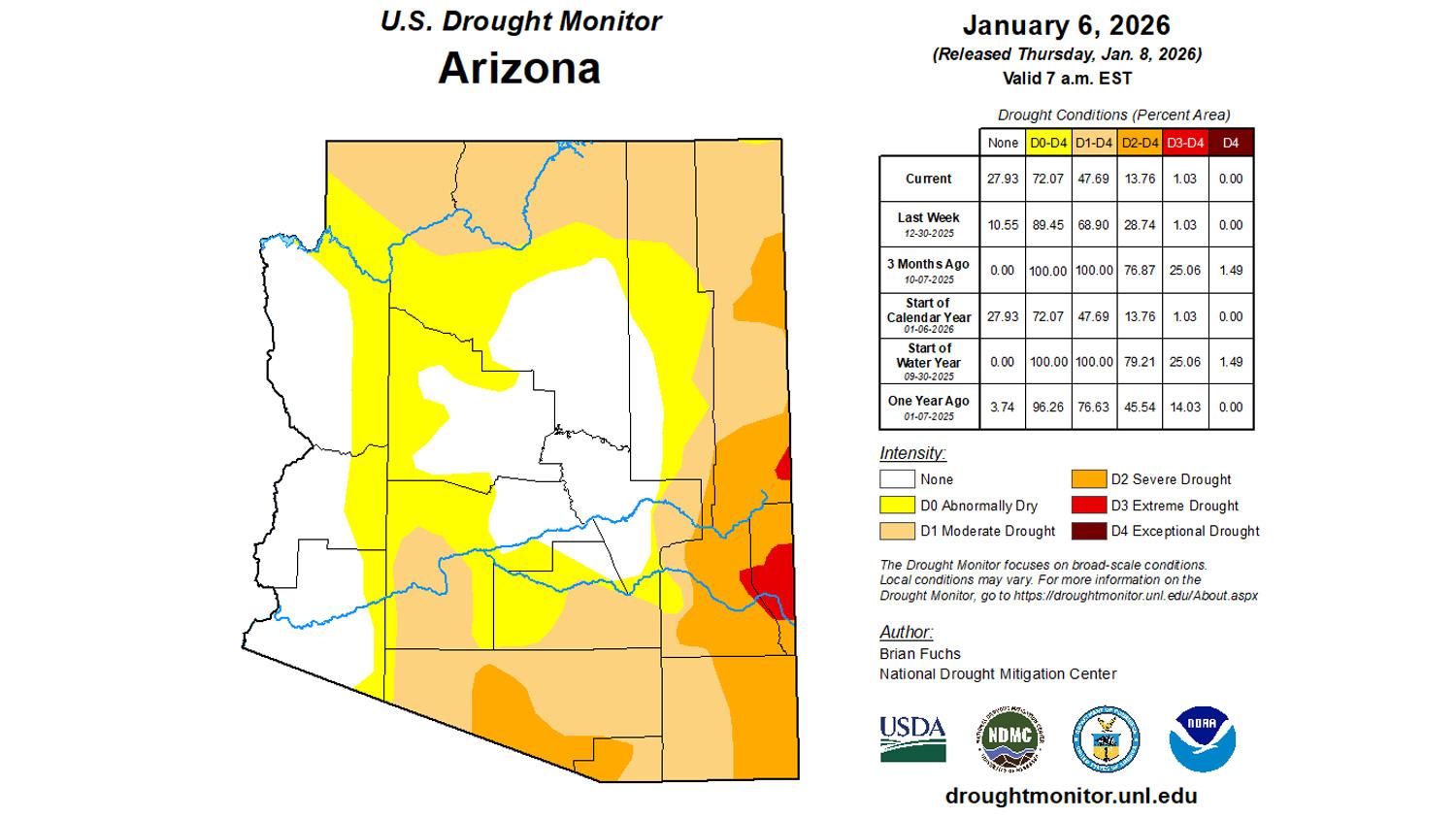
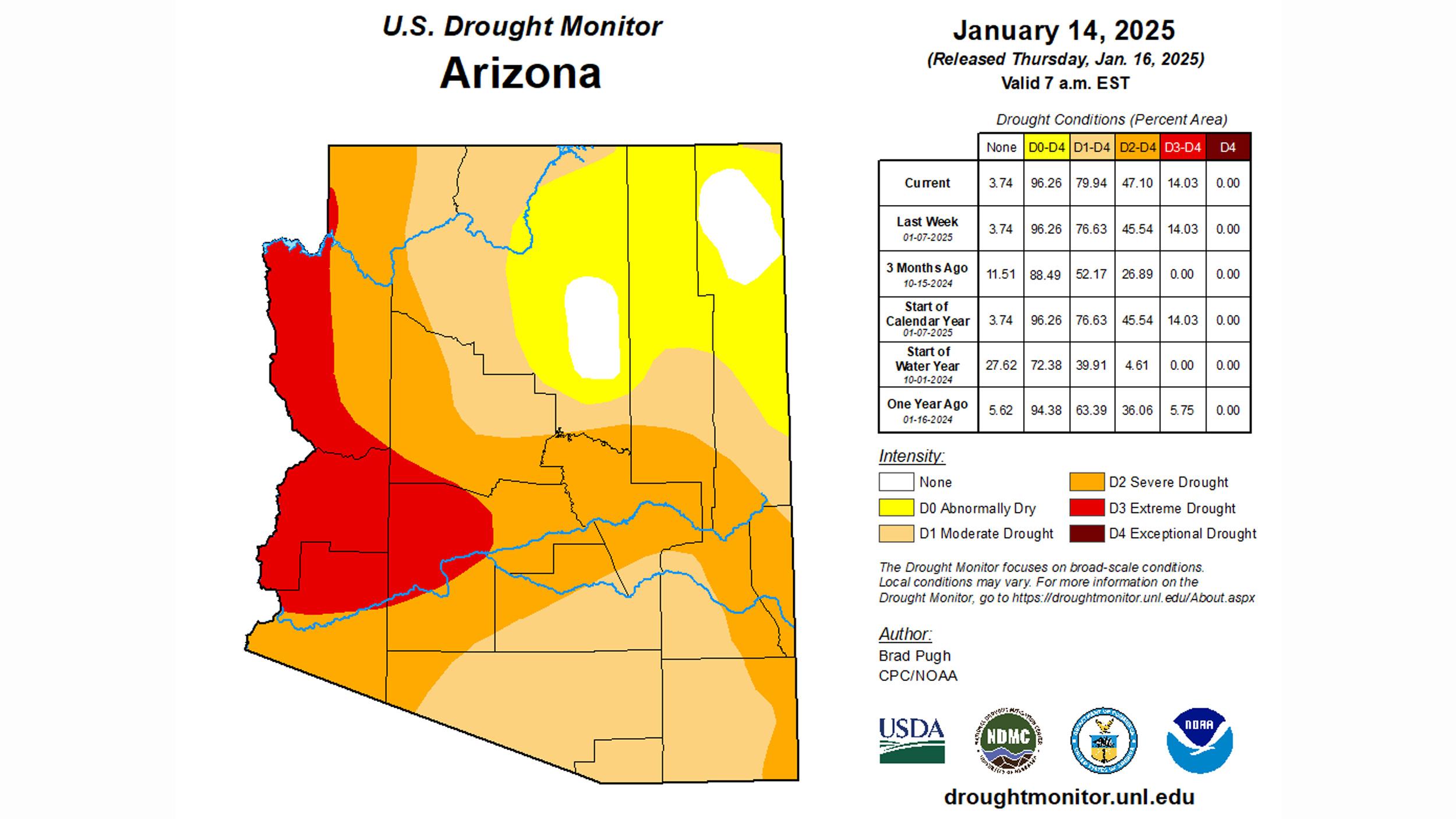
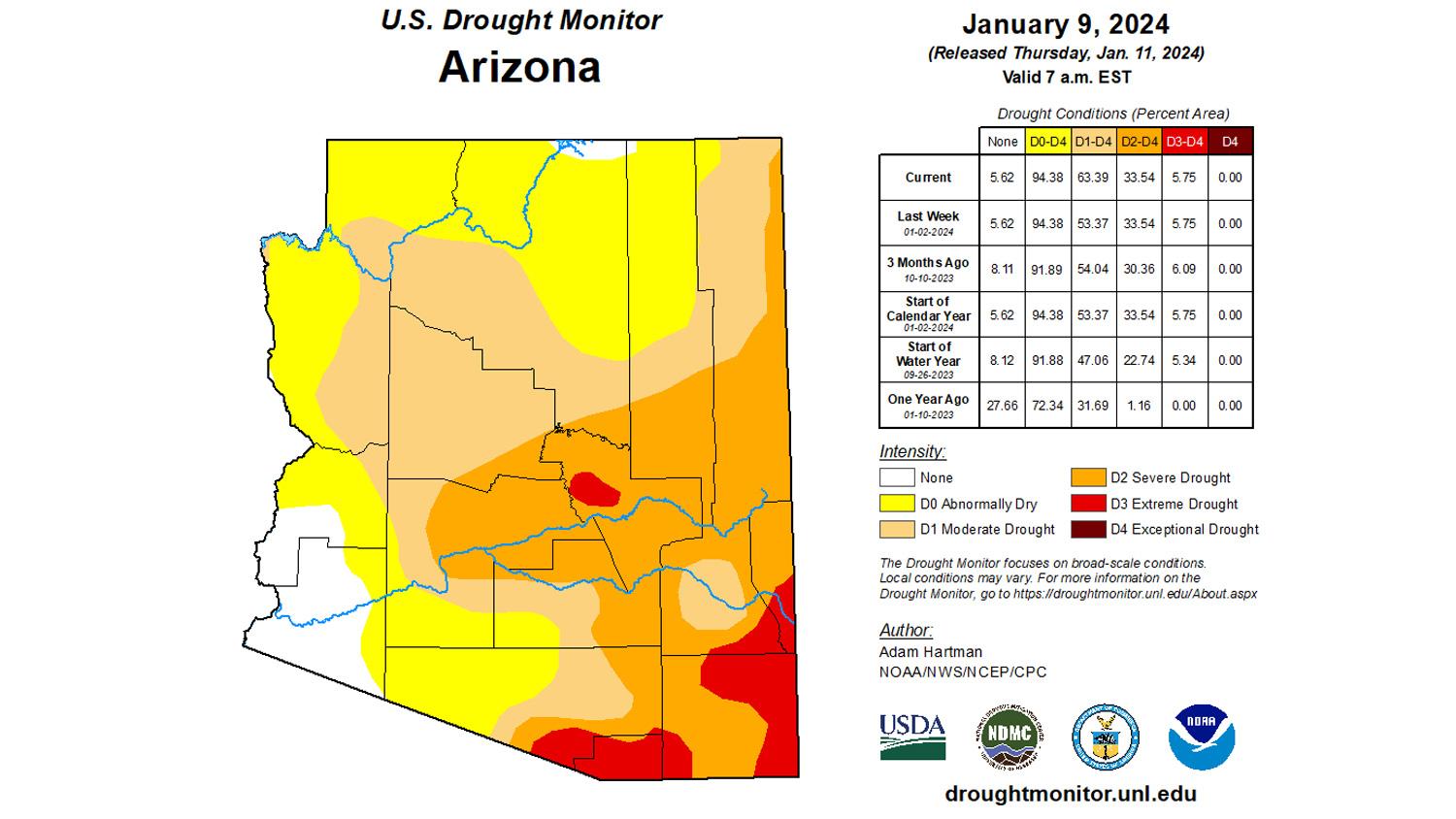
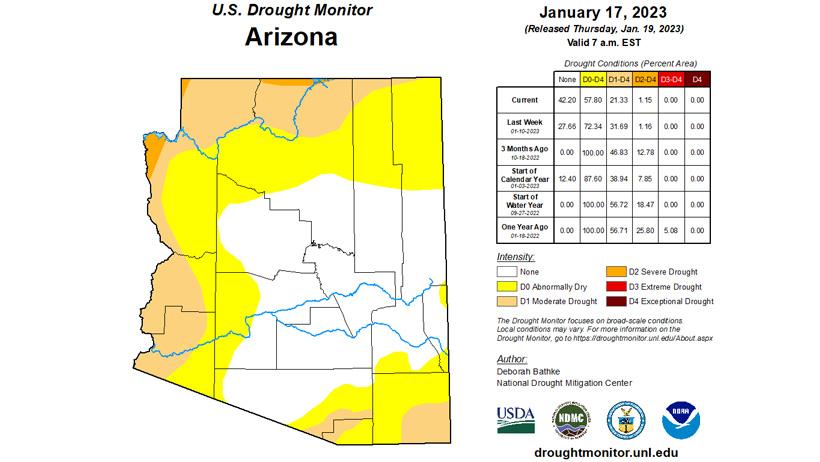
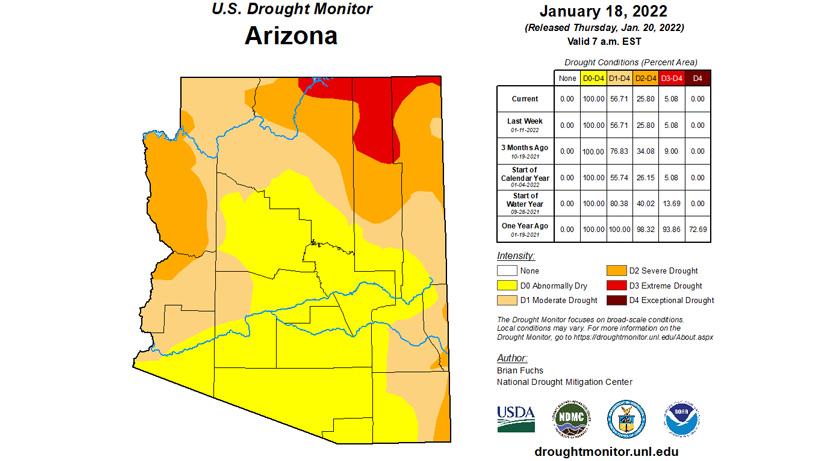
Arizona is a southern state, antler growth and herd health is very closely tied to monsoon and winter moisture. When Arizona has good moisture, the antler growth is noticeably better. Currently, most of the state is in moderate to abnormally dry condition. The eastern portion of the state is in severe drought condition currently. The central portion of the state is doing well, with no drought. Prior to November the state was in rough shape. A slow-moving weather system in mid-November brought large amounts of precipitation across much of the state and from September to November the state ended with the 9th wettest Fall on record. The moisture was much needed but it’s not enough yet.
Overall, we have seen Arizona in much worse conditions during this same timeframe but it’s by no means looking like a banner year for growth unless snow and rain continue throughout the early spring months. We know that the body condition of the mother on the year the bull calf is born is critical to antler growth for the lifespan of the bull and most bulls reach their growth potential by 6 to 7 years. If we look back to September 2020 to August 2025 it was the 6th hottest and 7th driest on record. It’s early to make a final judgement, but I don’t believe that 2026 will be a particularly great year for antler growth. This may be less critical for most applicants, but for those with a lot of bonus points, it’s worth considering before you apply.
Arizona offers several seasons that applicants can apply for. There are early and late archery hunts, late rifle hunts, and units will also offer either an early rifle hunt or an early muzzleloader hunt. The September hunts are the best options for both trophy potential and harvest success while the bulls are rutting. The late hunts are much more challenging due to the additional hunting pressure, and bulls are no longer vocal. In addition, much of Arizona is thickly vegetated and some areas are incredibly rough. Post-rut bulls will search for solitude in rough, thick terrain where they can avoid pressure and attempt to recoup the fat they’ve lost during the rut. The odds of drawing late season permits is certainly better, but hunters will need to scout and hunt harder for opportunities to kill.
Overall, Arizona is still a great elk state, and every year, there will be world-class bulls killed, but the reality is that, with current management and the lack of moisture in recent years, it’s likely to be another down year in terms of the quality of bulls. I still think you should apply, but do your homework, adjust your expectations, and apply accordingly.
Use the detailed Draw Odds view to look at draw trends and see where you can expect to draw in the maximum points pool.
As you can see, the best hunts require a lot of points. Given the fact that a portion of Arizona’s permits are offered to applicants with the most bonus points, point creep is an issue just like it is in several states in the West. Generally speaking, many hunts are jumping approximately one point per year and a few jumped more than one bonus point. This means that if applicants are looking at the odds at their current point level, they may not draw going into 2026.
You should look at the detailed draw odds pages for the hunts you are considering to further evaluate your odds of drawing this year. Below, we will break down some of the best hunt options for applicants at a variety of point levels.
The best hidden gems for Arizona elk are the late archery hunts. Understand that the late archery hunts can be extremely difficult spot and stalk hunts in remote terrain that is heavily vegetated; however, every year, there are great bulls taken. For the number of points required, they are good hunts, in my opinion. With the addition of late rifle tags in 2026, the late rifle hunts are also worth considering and could yield some hidden gems in 2026.
2026 maximum bonus points for elk: 33
There’s no doubt that Arizona has and will continue to put trophy bucks in the record books, but I think most people have a skewed perception of Arizona antelope hunting. More pointedly, the few lucky recipients of an Arizona antelope permit are not guaranteed a trophy buck. The reality is that most hunters are going to go home with an average buck. In saying that, there are units that historically do offer better odds at an 80”+ buck. Units 5A, 5B, 4A, 4B and perhaps 7 are all strong options for applicants wanting to maximize their trophy potential. Beyond that, there is always the off chance that a giant buck will pop up, but it’s the exception rather than the norm.
Given the extremely low odds of drawing and the average trophy potential throughout most of the state it begs the question, should you actually apply? To answer that question, I would suggest that applicants consider if it’s worth the $15 application fee to have some chance in the draw. Remember that a portion of the permits are randomly allocated. If you are buying the $160 nonresident hunting license to apply for other species like elk, deer, and bighorn sheep then I think it’s worth the additional $15 app fee to also apply for antelope. If you are only buying the hunting license to apply for antelope, I do not think that is a good investment of your money. Unless you have max bonus points, you can consider the $15 application fee as the cost of buying a raffle ticket and a donation to Arizona wildlife.
Arizona has struggled to maintain and grow their pronghorn herds. They are not susceptible to winterkill like Wyoming or Montana, but they do deal with drought, and last year was a rough one. There is good news though, this fall and early winter has yielded good amounts of rainfall and it should help those ranges rebound and provide good feed. I would expect the trophy potential to be much better than last year and I anticipate some great bucks being taken this fall. The only negative is that the number of permits is lower again this year due to the previous year's drought.
Arizona offers archery hunts, rifle hunts and some muzzleloader hunts, each of which will occur in some part of the rut. The harvest success rates are good for rifle and muzzleloader hunts, while the archery success rates fluctuate quite a bit.
The best advice I can offer before you apply is that each applicant considers their objective and the time and effort they have to put into the hunt. If you are only interested in maximizing your trophy potential, then apply for one of the best units/hunts. If you have less than max points and want to maximize your odds of drawing, the units that offer better odds will require a lot of time to scout and hunt. There are some bigger bucks that can be found in units that are not on the hitlist below, but make sure you have the time to scout and hunt because they are not guaranteed by any means. Overall, I think it’s worth applying in Arizona still for antelope, but do some soul searching and consider your goals and budget before you do.
2026 maximum resident bonus points for antelope: 36
Do not expect to draw an antelope permit in Arizona this year or, potentially, in your life. It’s unfortunate, but that is the current state of antelope hunting there. So why apply for Arizona antelope? The only reasons that someone should apply for antelope in Arizona are if they are already buying the hunting license to apply for the other species, or they have been building points for a couple of decades. Beyond that, it’s very hard to make a case for applying. For the extra $15 fee, it may be worth it to you to apply, but maintain reasonable expectations if you do apply.
The Arizona Game and Fish Department (AZGFD) requires applicants to have a Customer ID to apply in the draw. New applicants can set up an account on their website. The Customer ID Retrieval Tool can be accessed at www.azgfd.gov/draw during the draw application process to look up the number.
Applicants must have a valid Arizona hunting license to apply for a permit.
Your hunting license must be valid on the application deadline; otherwise the application will be void.
Applicants should keep their debit/credit card payment information current. If your payment is declined at the time of the draw, your application will not be drawn.
Hunting licenses will be sold online only. AZGFD will no longer offer traditional paper licenses sold through licensed dealers.
Arizona offers an online hunter’s education course. Once completed, one lifetime bonus point for each species will be added to your account. This is a great way to increase the number of bonus points you have and a must if you plan to keep up with other applicants. You must be 18+ to complete the course and the cost is $300 for nonresidents and $150 for residents. It may take two weeks to a month to have the extra point show up in your account. Do not delay in taking the course!
The Units 7E and 8 early rifle elk hunt has been removed.
The Unit 9 and 27 early muzzleloader elk hunt has been removed.
The Unit 1/2B/2C early rifle elk hunt has been removed.
Unit 5B will have an early rifle elk hunt.
Unit 5A will have an early muzzleloader elk hunt.
Units 9 and 27 will have an early rifle hunt.
Units 1/2B/2C will have an early muzzleloader elk hunt.
Units 7E and 7W will have 50 permits added for those elk hunts.
Unit 8 will have a rifle antelope hunt, but has dropped the muzzleloader hunt.
The deadline to apply online is Feb. 3, 2026, at 11:59 p.m Arizona time.
Successful applicants will have permits mailed out by April 1, 2026.
Payment must be made by VISA or Mastercard for online applications.
Applicants must have a valid Arizona hunting license to apply for a permit.
Your hunting license must be valid on the application deadline;, otherwise the application will be void.
There is a $15 nonrefundable application fee per species for nonresidents.
No one under the age of 10 can hunt big game in Arizona. Youth are eligible to apply for permits if they have completed hunter education and will be 10 at the start of the hunt.
Permits are awarded through a hybrid draw system: bonus point draw and a subsequent random draw (see draw system details below for more information).
If you need help looking up your Arizona bonus points, check out this article.
Loyalty bonus point. A loyalty bonus point is an additional bonus point that is awarded after having applied for any given species for five consecutive years. This is a species-specific point and will not be taken away when you draw a tag. It will be purged if you miss a year of applying and would restart the process. Don’t miss a year of applying!
Arizona hunter’s education course bonus point. Arizona offers a permanent bonus point for each species if you complete their hunter’s education course. In the past, you needed to attend and take this course in person in order to obtain the point. That is no longer the case. You can take their hunter’s education course online. Nonresidents will need to pay the $300 course fee and complete the instructional and test portion of the class. The resident fee is $150. You must be 18 years or older to take the class. Approximately two weeks to 30 days after you have completed the course, they will update your account with the extra bonus point. This point is permanent and will never be purged.